Every healthcare practitioner enters medicine to heal, comfort, and care for human beings. Yet today's healthcare reality is defined by an overwhelming administrative burden: filling out endless forms, wrestling with clunky software, playing phone tag with patients, and manually verifying insurance. Across the globe, doctors report spending more time staring at computer screens than looking into their patients' eyes. Automation in healthcare is transforming this dynamic—not by replacing medical expertise, but by eliminating administrative friction and restoring human connection to modern medicine.
Executive Summary: Automation in Healthcare
- Physician Well-Being: Healthcare automation eliminates 2.5 to 4 hours of manual EHR data entry daily, curbing burnout and restoring eye-to-eye clinician empathy.
- Revenue Protection: Automated appointment confirmation and dynamic rescheduling sequences reduce no-shows by 40%, recovering over $150K in annual lost revenue.
- Clinical Precision: Ambient scribing and automated prescription validation detect drug interactions, dosage errors, and contraindications in real time.
- The Doctor-First Principle: Automation does not replace doctors; it frees them from clerical burdens so they can practice at the pinnacle of their medical license.
Healthcare Automation refers to the application of intelligent software workflows, ambient artificial intelligence, and digital communication tools to eliminate manual administrative friction, accelerate clinical charting, and maintain proactive patient relationships.
The Administrative Tax on Modern Healthcare
Numerous medical studies have reached the same sobering conclusion: for every 1 hour a physician spends delivering direct patient care, they spend nearly 2 hours managing electronic health records and administrative desk work.
This administrative tax produces compounding damage across the entire healthcare ecosystem:
- Physician Burnout & Brain Drain: Over 60% of clinicians report feeling burned out, leading to early retirement, reduced clinical hours, and worsening doctor shortages.
- Fragmented Patient Care: Rushed 5-minute consultations leave patients feeling like numbers on a conveyor belt, resulting in poor treatment adherence and low patient satisfaction.
- Operational Revenue Leakage: Unfilled cancellation slots, missed appointment reminders, delayed insurance verifications, and uncaptured billing codes cost the average practice hundreds of thousands of dollars annually.
The Mission of Healthcare Automation: Automation is not about mechanizing the clinical encounter; it is about taking the robot out of the human. By assigning repetitive, cognitive clerical tasks to intelligent software, doctors and nurses can return to the true craft of healing.
Four Core Domains Where Healthcare Automation Delivers Immediate ROI
1. Front-Office & Patient Scheduling Automation
The traditional front desk is inundated with telephone calls: patients asking for appointments, rescheduling visits, requesting directions, or checking doctor availability.
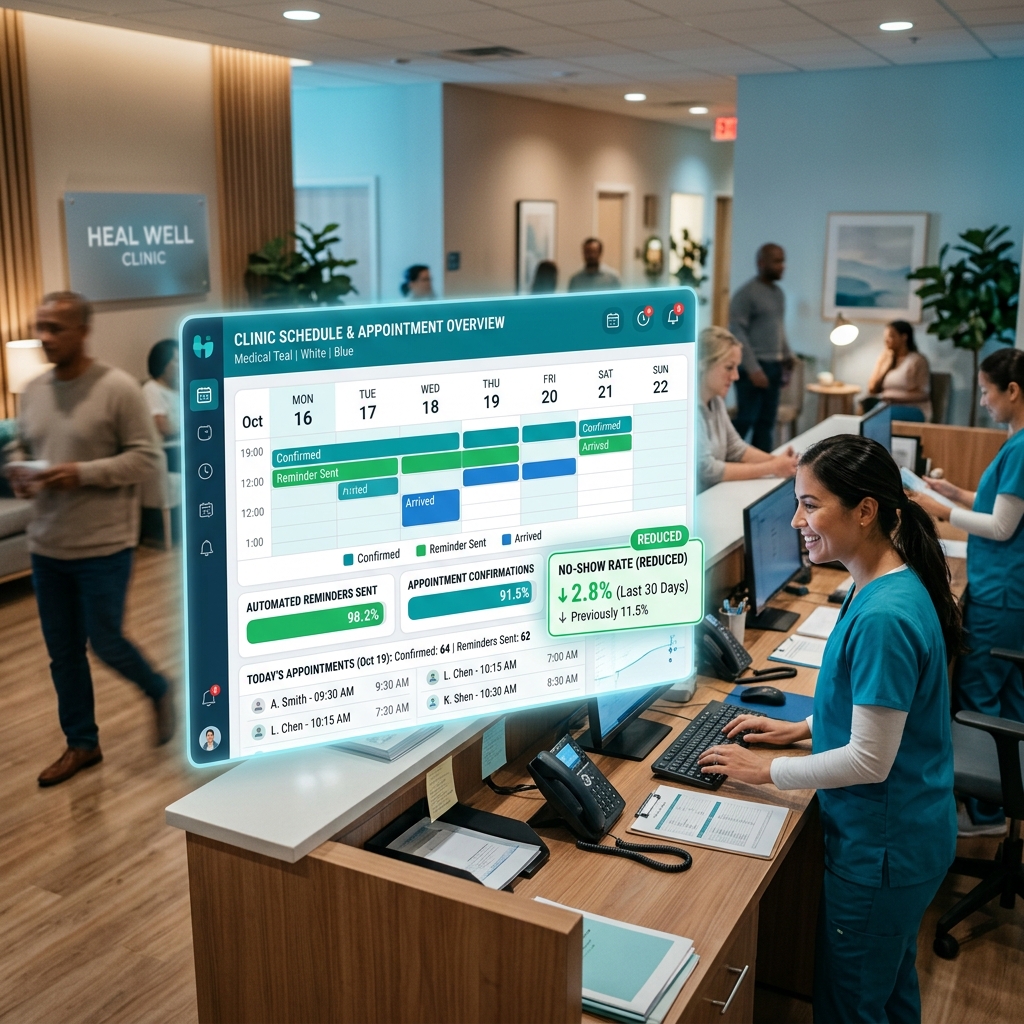
Automating the front office via conversational messaging (such as WhatsApp Business Automation) fundamentally transforms this workflow:
- 24/7 Self-Service Booking: Patients schedule appointments directly within WhatsApp or web chat in under 60 seconds.
- Conversational Reminders: Automated reminders sent 24 hours and 2 hours prior to the visit allow patients to confirm or reschedule with one tap, driving a sustained 40% reduction in no-show rates.
- Dynamic Waitlist Backfilling: When a cancellation occurs, the system automatically messages waitlisted patients to backfill the slot, recapturing lost revenue in real time.
2. In-Room Clinical Documentation Automation
During the consultation, doctors have historically been forced into “screen-gazing”—typing symptoms, selecting physical exam findings from dropdowns, and searching medication catalogs while the patient speaks.
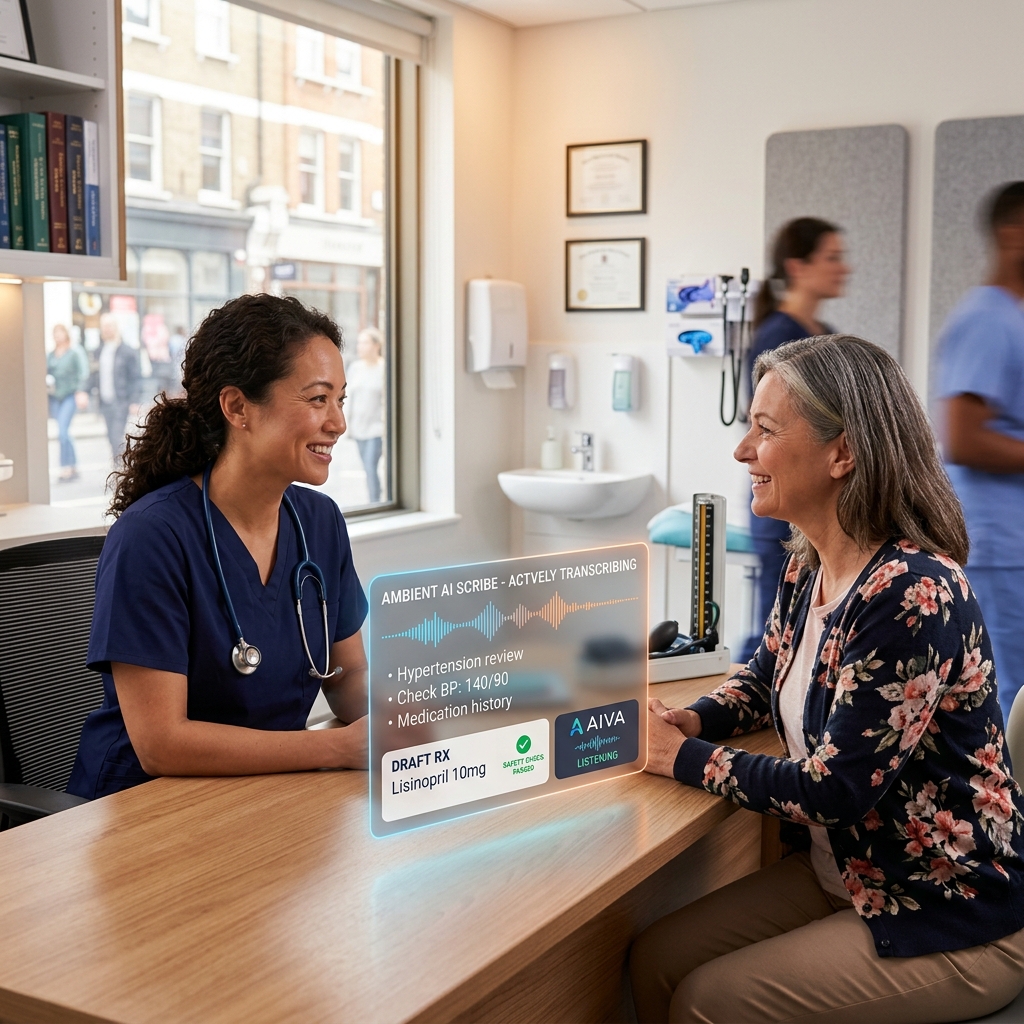
With ambient AI scribes (such as ReyanLabs Ambient Scribe):
- The AI listens quietly in the background as the doctor and patient speak naturally.
- It extracts subjective complaints, objective vitals, diagnostic reasoning, and management plans into structured SOAP notes formatted to the clinic's custom templates.
- Prescription orders and diagnostic test requests are drafted automatically with real-time safety and allergy verification.
- The doctor simply reviews, signs, and closes the chart before the patient leaves the room. Zero homework; zero after-hours charting.
3. Patient Flow & Outpatient Queue Automation
Waiting room anxiety is one of the top causes of patient dissatisfaction. When patients arrive at a busy clinic with no visibility into how long they will wait, frustration mounts.
Automating the outpatient queue (via Token Queue Management) provides complete transparency:
- Patients scan a QR code upon arrival and receive a digital token link on their smartphone.
- Live status indicators show how many patients are ahead of them and their estimated call time.
- Automated notifications alert patients when their turn is 5 minutes away, allowing them to wait in comfort outside crowded waiting rooms.
4. Post-Encounter Continuity & Care Retention Automation
In unautomated healthcare, clinical responsibility effectively ends once the patient leaves the clinic building. Patients who experience unexpected medication side effects often stop taking their pills without informing their doctor, leading to chronic disease decompensation and emergency readmissions.
Conversational AI voice agents automate post-visit monitoring:
- Autonomous check-in calls on Day 3 or Day 7 verify whether the patient obtained their medications, if their symptoms are subsiding, and if any adverse side effects occurred.
- If a patient flags an issue, the system alerts the clinic's triage nurse for timely clinical intervention.
- Routine recall reminders ensure that chronic care patients (hypertension, diabetes, thyroid disorders) book their follow-up labs and consultations on time.
Debunking the Top 3 Myths About Healthcare Automation
Myth 1: Automation Replaces Doctors
Reality: Automation handles administrative data entry, scheduling logistics, and note drafting. The diagnosis, clinical decision-making, and patient empathy remain 100% in the hands of the physician.
Myth 2: Patients Prefer Phone Calls
Reality: Over 85% of modern patients prefer instant messaging and automated digital booking over waiting on hold for 10 minutes to speak with a receptionist.
Myth 3: Automation Takes Months to Implement
Reality: Cloud-native healthcare automation platforms deploy in days, requiring zero hardware installation and minimal staff training.
The 4-Step Blueprint to Automating Your Clinic Operations
Practices looking to modernize their workflows can execute a phased, high-impact automation rollout:
- Phase 1 — Automate the Front Door: Deploy WhatsApp appointment booking, automated 24-hour reminders, and pre-visit intake forms to immediately curb no-shows and front-desk phone congestion.
- Phase 2 — Digitize the Waiting Experience: Implement a digital token queue with real-time smartphone tracking to eliminate physical crowding and waiting room tension.
- Phase 3 — Adopt Ambient Clinical Charting: Introduce ambient AI medical scribing and AI-assisted e-prescriptions to eliminate physician documentation backlog.
- Phase 4 — Close the Post-Care Loop: Implement automated voice agent check-in calls and recall automation to boost patient retention and long-term care compliance.
Frequently Asked Questions
Why is automation in healthcare important today?
Healthcare automation relieves severe administrative burdens, reduces doctor burnout by automating charting, decreases waiting room congestion, and ensures proactive patient follow-ups that improve long-term clinical outcomes.
Does healthcare automation replace medical staff?
No. Automation in healthcare is designed to eliminate repetitive administrative friction—such as manual data entry, phone calls, and appointment reminders—allowing doctors and nurses to dedicate their undivided attention to patient care.
Which workflows should healthcare practices automate first?
Clinics generally start with front-desk appointment reminders and self-service rescheduling on WhatsApp, followed by ambient AI clinical scribing and automated post-consultation recovery check-ins.
Conclusion
The future of healthcare is neither cold nor robotic—it is deeply human, supported by seamless automation running quietly in the background. By removing administrative friction, healthcare organizations can achieve the elusive “quadruple aim”: better clinical outcomes, lower operational costs, superior patient experience, and restored clinician well-being.
Discover how ReyanLabs brings intelligent automation to clinics and hospitals worldwide. Book a consultation with our healthcare automation specialists today.