How AI Helps in Diagnosing Health Issues: Early Detection, Clinical Accuracy, and Patient Outcomes
In clinical medicine, timing is everything. Whether halting coronary artery disease before a myocardial infarction, intercepting oncological lesions before metastasis, or identifying diabetic microvascular decline before irreversible organ injury, early diagnosis remains the single greatest determinant of survival and long-term vitality. Yet many of humanity's deadliest illnesses progress silently in their earliest stages, presenting with ambiguous or sub-clinical symptoms. Artificial intelligence is breaking this diagnostic bottleneck. By applying deep learning algorithms to multi-modal bio-signals, radiological scans, electrocardiograms, and longitudinal laboratory trends, clinical AI empowers physicians to detect health issues with unprecedented speed, pinpoint accuracy, and preventive foresight.
Executive Summary: How AI Helps Diagnose Health Issues
- The Early Detection Breakthrough: AI identifies subtle physiological anomalies, sub-visual pixel variations in medical imaging, and micro-trends across vital signs months before overt symptoms arise.
- 5 Major Disease Arenas: Drives clinical breakthroughs in Cardiovascular Care (ECG arrhythmia detection), Oncology (early mammographic and pulmonary nodule detection), Endocrinology (diabetic retinopathy & CKD), Neurology, and Outpatient Triage.
- Micro-Pattern Recognition: Neural networks process thousands of data points simultaneously, catching complex multisystem correlations that human clinicians may overlook during compressed consultation hours.
- Proactive Care Continuum: Connects diagnostic findings to automated post-consultation monitoring via WhatsApp and autonomous voice agents, ensuring patients complete diagnostic follow-ups and adhere to therapy.
- The ReyanLabs Ecosystem: Integrates diagnostic decision support into Specialty EMRs, ambient AI scribing, and automated patient recall sequences to catch health issues before they require emergency hospitalization.
AI-Driven Early Disease Detection is the clinical deployment of machine learning algorithms, computer vision, and predictive predictive models to identify physiological anomalies, subtle imaging markers, and multi-variable laboratory trends before overt clinical symptoms manifest, enabling clinicians to intervene during the most treatable stages of disease.
The Early Detection Imperative: Why Micro-Patterns Matter
Human diagnostic perception is inherently threshold-based: a patient notices pain, shortness of breath, or a palpable lump, schedules an appointment weeks later, and undergoes confirmatory testing. By the time symptoms become obvious enough to trigger a visit, disease progression is often already advanced.
In contrast, clinical artificial intelligence excels at continuous micro-pattern recognition. Machine learning models analyze non-linear interactions across physiological variables that appear completely normal in isolation but signal impending pathology when synthesized together:
- A microscopic upward drift in serum creatinine over 18 months, even while staying within the normal reference range, flagging early chronic kidney disease (CKD).
- Subtle millivolt variations in an otherwise normal-appearing 12-lead ECG that reveal paroxysmal atrial fibrillation or occult left ventricular systolic dysfunction.
- Micro-calcification clusters in mammography or faint ground-glass opacities on low-dose chest CTs that fall below human perceptual thresholds on hurried screening lists.
5 Critical Health Issues Where AI Transforms Diagnosis
1. Cardiovascular Health: ECG Waveforms & Silent Arrhythmia
Cardiovascular diseases remain the leading cause of mortality worldwide, with sudden cardiac death often striking individuals who considered themselves asymptomatic. AI algorithms trained on hundreds of thousands of paired ECGs and echocardiograms can now identify structural heart disease from a standard, resting 12-lead ECG.
The AI detects subtle repolarization abnormalities and localized conduction delays that predict paroxysmal atrial fibrillation, hypertrophic cardiomyopathy, and severe aortic stenosis, allowing cardiologists to initiate prophylactic anticoagulation or echocardiographic evaluations months before a catastrophic stroke or heart failure event.
2. Oncology & Radiology: Spotting Sub-Visual Malignancies
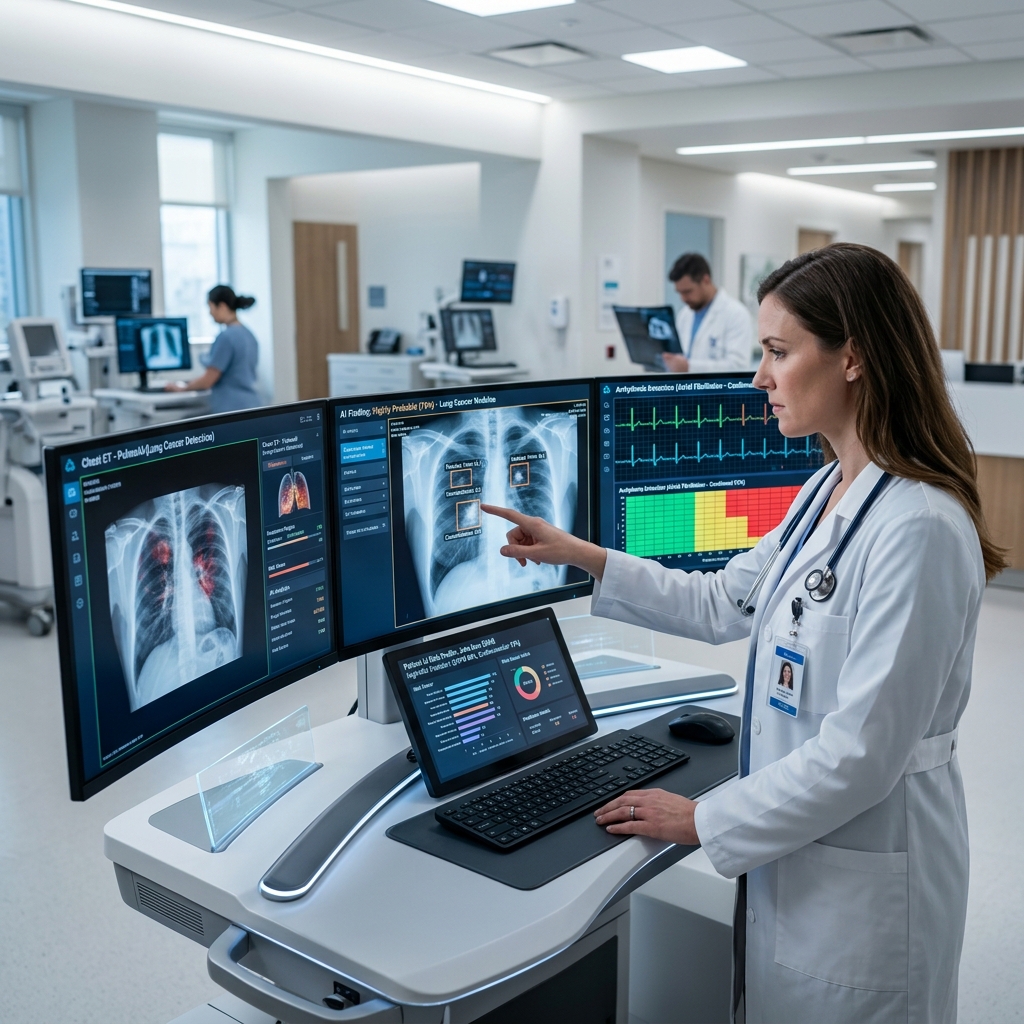
Radiologists examine hundreds of multi-slice imaging studies daily, creating immense cognitive fatigue. Computer vision models trained on millions of annotated radiological scans serve as an untiring secondary reader:
- Lung Cancer Screening: AI algorithms detect pulmonary nodules as small as 2 to 4 millimeters on low-dose CT scans, calculating volume doubling times and malignancy probability scores with over 94% sensitivity.
- Breast Cancer Detection: In mammography, AI pinpoints architectural distortion and asymmetric densities up to two years before human clinical palpability, reducing false-negative interpretations by up to 20%.
- Dermatology & Melanoma: Deep convolutional neural networks analyze dermatoscopic lesion images, distinguishing benign melanocytic nevi from aggressive malignant melanomas with diagnostic accuracy matching board-certified dermatologists.
3. Chronic Disease Surveillance: Diabetes, Retinopathy & CKD
Metabolic conditions like Type 2 diabetes are notoriously stealthy. Diabetic retinopathy is the leading cause of preventable blindness among working-age adults, yet fewer than 50% of diabetic patients receive their recommended annual fundus examination due to lack of specialist access.
Autonomous AI diagnostic cameras deployed in primary care clinics capture retinal fundus photographs and deliver an instantaneous, FDA/CE-cleared diagnosis of diabetic retinopathy and diabetic macular edema in under 60 seconds, eliminating referral delays and ensuring timely laser or anti-VEGF therapy.
4. Neurology & Mental Health: Early Cognitive Biomarkers
In neurology and psychiatry, objective diagnostic biomarkers have historically been scarce. AI is revolutionizing this domain by analyzing digital speech patterns, subtle acoustic prosody shifts, and facial micro-expressions during clinical dialogues.
Natural language models can detect early semantic degradation, syntactic flattening, and pause duration variances that predict mild cognitive impairment (MCI) and early Alzheimer's disease years before standard Mini-Mental State Examination (MMSE) scores drop significantly.
5. Infectious Disease & Acute Sepsis Triage
In acute emergency and outpatient triage, sepsis is a medical emergency where mortality increases by 7.6% for every hour of delayed antibiotic administration. Predictive AI models continuously synthesize dynamic shifts in heart rate, respiratory variability, white blood cell trends, and lactate levels, alerting clinical teams to impending septic shock hours before blood pressure collapses.
Diagnostic Timeline: Conventional vs. AI-Assisted Detection
The diagrammatic comparison below demonstrates how AI shifts the diagnostic timeline from reactive symptom management to proactive, pre-symptomatic interception:
| Disease State | Conventional Diagnostic Timeline | AI-Assisted Diagnostic Timeline | Patient Outcome Impact |
|---|---|---|---|
| Atrial Fibrillation | Diagnosed after embolic ischemic stroke or acute palpitations | Detected via ECG micro-pattern screening during routine outpatient check-up | Stroke risk mitigated by >64% via timely oral anticoagulation |
| Early-Stage Lung Cancer | Discovered at Stage III/IV when persistent hemoptysis or cough appears | Flagged at Stage I as a sub-centimeter nodule on baseline CT screening | 5-year survival rate increases from 18% to over 85% |
| Diabetic Nephropathy | Identified when macroalbuminuria and severe pedal edema develop | Predicted 12–24 months earlier via longitudinal eGFR & micro-trend analysis | Progression to dialysis halted through early SGLT2i and ACEi initiation |
| Sepsis in Inpatient Care | Recognized after acute hypotensive collapse and organ failure | Alert triggered 4 to 6 hours before clinical decompensation via vital trends | In-hospital mortality reduced by up to 28% with rapid bundle therapy |
| Diabetic Retinopathy | Found only after irreversible central vision loss or macular detachment | Screened instantaneously at primary care visit via point-of-care AI fundus camera | Vision preserved in 95%+ of early diagnosed cases |
Closing the Outpatient Loop: Proactive Voice Agents & Early Triage
Catching health issues is only half the battle; ensuring patients follow through on diagnostic workups is the missing link in healthcare. Too often, patients fail to complete recommended blood draws, ignore imaging requisitions, or skip vital follow-up consultations because of anxiety or friction.
ReyanLabs bridges this gap by combining diagnostic intelligence with automated omni-channel engagement:
- Autonomous Post-Consultation Voice Calls: If an AI-assisted consultation flags elevated cardiac risk or pending lab reviews, ReyanLabs autonomous voice agents proactively call the patient on Day 3 to confirm testing completion and verify symptom stability.
- WhatsApp Care Navigation: Lab requisitions, pre-test fasting instructions, and direct scheduling links are dispatched immediately to the patient's WhatsApp, reducing diagnostic drop-off by over 45%.
- Red-Flag Escalation Engine: When patients report worsening symptoms during automated check-ins, the engine flags the clinical dashboard immediately, triggering rapid physician review.
Real-World Case Study: Detecting Silent Cardiac Ischemia
How does AI early detection function inside a busy primary care setting?
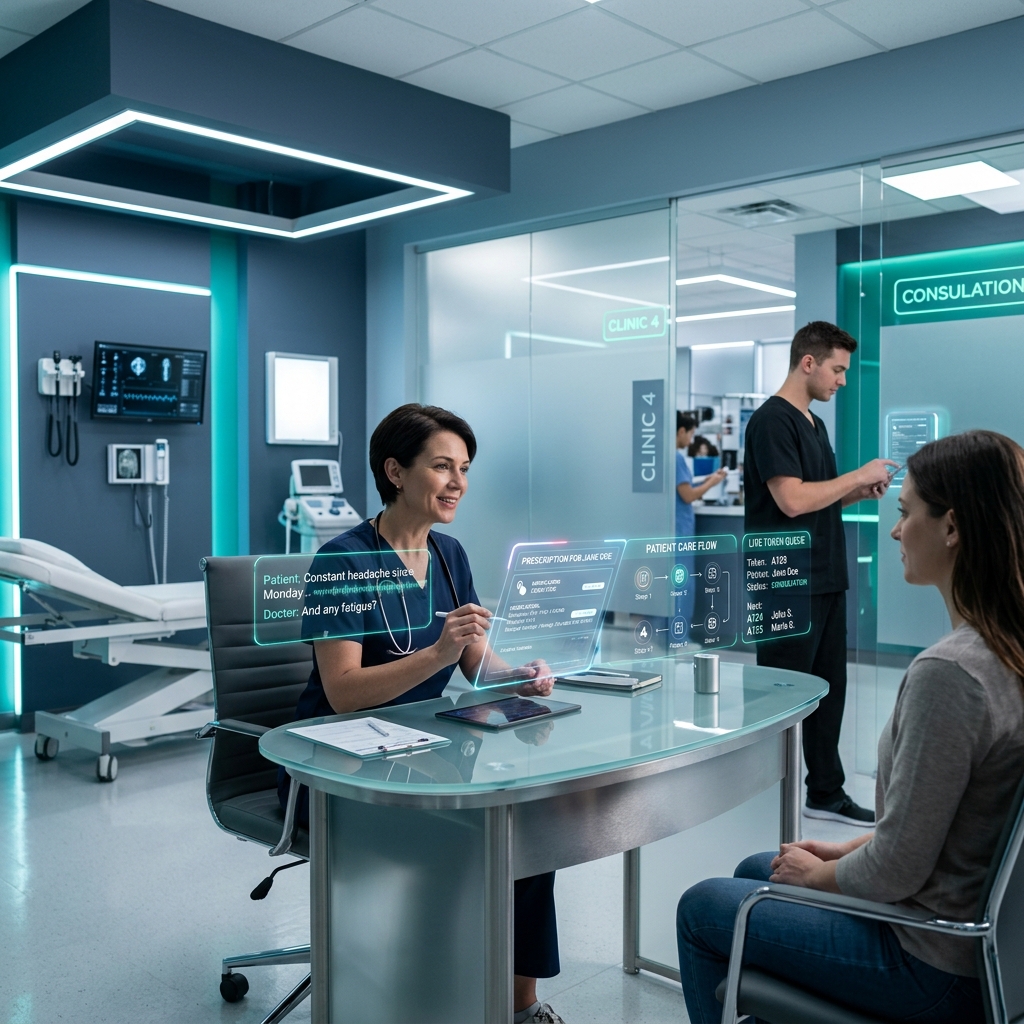
The Patient: Mr. Mehta, a 55-year-old software executive with mild hypertension, arrives at an ambulatory clinic for a routine prescription refill. He mentions feeling mildly fatigued over the past month, attributing it to job stress and late nights.
The Consultation: As the primary care physician discusses his medications, the ReyanLabs Ambient AI Scribe records the encounter and cross-references his digital history. The AI system notes his smoking history from 5 years ago, calculates an elevated atherosclerotic cardiovascular disease (ASCVD) 10-year risk score (18.2%), and recommends a baseline 12-lead ECG.
The AI Detection: The clinic conducts the ECG on-site. While the tracing appears superficially normal to a rapid glance, the embedded diagnostic AI flags: “High probability of silent myocardial ischemia: Subtle T-wave flattening across leads V4-V6 with reciprocal depression. Recommend urgent high-sensitivity troponin and Cardiology evaluation.”
The Outcome: High-sensitivity troponin returns mildly elevated. Transferred to the cardiac catheterization lab, an angiogram reveals a critical 92% stenosis in his proximal left anterior descending (LAD) coronary artery. A coronary stent is successfully deployed, preventing an imminent and potentially fatal anterior wall myocardial infarction.
Frequently Asked Questions
How does AI help in diagnosing health issues early?
AI identifies subtle patterns and micro-trends across vital signs, blood panels, electrocardiograms, and diagnostic images often days or months before overt symptoms manifest, enabling early intervention for conditions like cardiac arrhythmia, diabetic complications, and oncological lesions.
Which medical conditions benefit most from AI diagnostic support?
Conditions with high diagnostic complexity or subtle early indicators benefit most: cardiovascular diseases (subtle ECG arrhythmia and heart failure prediction), oncology (mammography and lung nodule detection), ophthalmology (diabetic retinopathy), chronic metabolic diseases, and outpatient triage for infectious illnesses.
Does AI diagnostic software improve patient outcomes?
Yes. Studies show that AI diagnostic tools decrease diagnostic delays, lower emergency readmission rates by identifying at-risk patients early, and improve treatment adherence by providing patients with understandable digital summaries and proactive post-consultation care.
Is patient data secure when using AI diagnostic systems?
Yes. Enterprise healthcare AI systems like ReyanLabs operate under strict compliance protocols—including HIPAA, GDPR, ISO 27001, and SOC 2 Type II—with end-to-end 256-bit encryption and strict data minimization, ensuring patient medical data is never shared or used to train public foundation models without explicit consent.
Conclusion: The Promise of Predictive Medicine
Healthcare is undergoing a historic transition from reactive sick-care to proactive, predictive health preservation. By empowering doctors to detect the earliest fingerprints of disease across medical scans, bio-signals, and longitudinal records, AI-driven diagnostics is making medicine faster, safer, and far more human.
At ReyanLabs, our mission is to deliver these powerful diagnostic and operational workflows to clinics, hospitals, and independent doctors around the globe—seamlessly integrated into the tools they use every single day.
Learn how ReyanLabs empowers your practice with cutting-edge clinical AI. Book a personalized platform demo or explore our Specialty EMR & Clinical Workflows today.